-
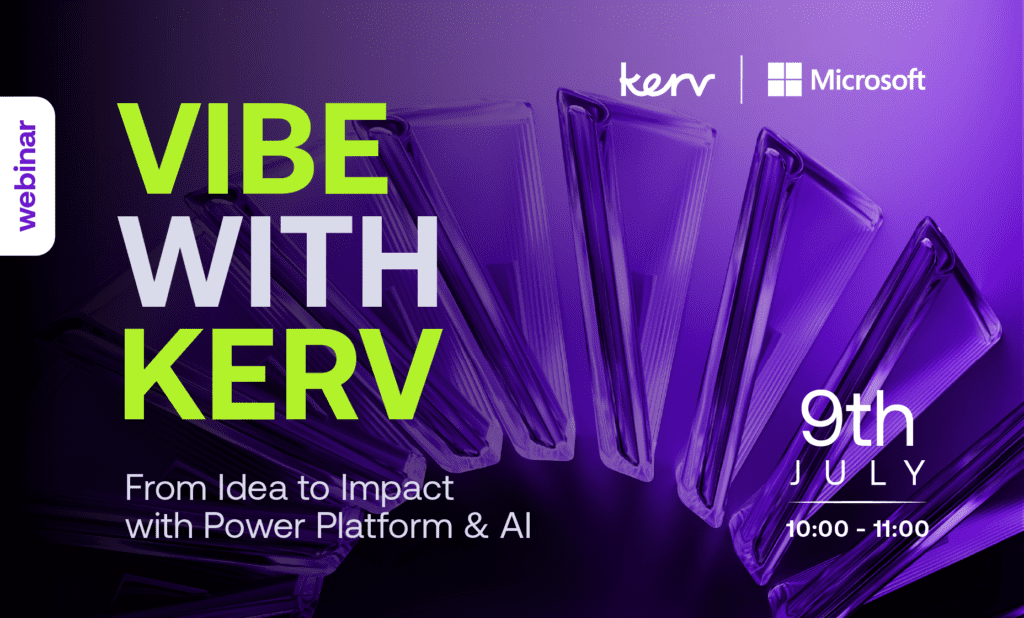
DateThu 9th July 2026
-
Time10:00 - 11:00
-
Event TypeWebinar
-
LocationOnline Event
This event has passed
Every great solution starts with an idea, but bringing that idea to life has often been the hardest part.
This new generation of technology is reshaping how nonprofits build, test, and deliver digital solutions. With low-code tools and AI working hand-in-hand, it’s now possible to turn ideas into impactful applications faster than ever – without the usual complexity – opening the door for nonprofit teams to create digital solutions that truly resonate with users.
This webinar will explore how “Vibe Coding” with Microsoft Power Platform is unlocking new possibilities – making app development more accessible, dynamic, and impactful than ever before. Designed with nonprofit teams in mind, this session will show you how to turn ideas into usable, impactful tools – quickly and creatively.
What makes this session different is its focus on real-world application. We’ll be tackling a real-world challenge, giving context and perspective as we explore how it can be solved using low-code and AI.
We’ll be joined live by an industry expert, who will share a genuine challenge they’ve faced – giving context and perspective as we explore how it can be solved using low-code and AI.
You’ll see this brought to life through a live build, where we’ll create a modern Power App in real time to address the scenario by bringing together usability, efficiency, and real-world impact in a single end-to-end example.
What this webinar will cover:
✨ Explore “Vibe Coding” with Power Platform
Discover a fresh approach to app building – one that puts user experience, creativity, and intuitive design first. We’ll show how you can move beyond traditional development methods and focus on building solutions people actually want to use.
🔧 See a “Code App” Built Live Using Vibe Coding
Watch a real-time walkthrough as we build a sleek, modern Power App from scratch. You’ll see how simple it can be to create something practical, polished, and purpose-driven. Using a real-world nonprofit scenario, we’ll be focussing on usability and impact, rather than technology.
🤖 Combine Low-Code with AI Capabilities
Learn how to harness the power of Power Apps, Power Automate, and Copilot together to accelerate development. We’ll explore how AI can help you move from concept to working solutions faster than ever before.
💡 Learn Practical Use Cases & Design Tips
Walk away with real-life examples, best practices, and design ideas to help you create apps that are not just functional, but genuinely useful, engaging, and impactful for your team and communities.
Why Attend?
- Build skills in modern app development without needing a technical background
- Learn how to turn everyday challenges into simple, effective digital solutions
- Understand how to combine low-code and AI to speed up delivery of new ideas
- Take away practical techniques to improve processes and services quickly
Speakers

Mandeep Padan
Solution Director - Social Enterprise


AJ Zafar
Senior Solutions Architect


Mary O'Callaghan
Nonprofit Industry Expert
Mary O’Callaghan is an experienced Technology leader, Director of Technology and Chief Technology Officer. Her career spans many sectors, including Healthcare, Charity, Performing Arts, Commercial Events and Management Consultancy. She is passionate about the role of technology in improving outcomes for all and nurturing the capabilities and confidence all members of a team need to achieve that goal.
Mary is currently supporting the MND Association with Technology strategy and transformation, as the organisation launches its new strategy, seeking to be even more impactful and influential in supporting people with MND and funding even more medical research into the disease. Prior to this Mary worked with British Heart Foundation as Director of Technology for Medical and Transformation, leading the implementation of new, product and data led ways of working. She led the development of the BHF’s first cross organisational data strategy, harnessing the power of data to enhance the delivery of the BHF’s mission.
Prior to joining BHF, Mary was the lead consultant in Z/Yen’s civil society practice, delivering strategic change across organisations including charities, trades unions, public sector bodies, financial institutions and NHS Trusts. She was the Programme Manager for the establishment of the award winning CharITyshare, and SPHERE Systems Empowering Healthcare, as well as Z/Yen’s early development of Mutual Distributed Ledgers (Blockchains). Mary is a graduate of Trinity College Dublin and University College Galway.
Mary O’Callaghan is an experienced Technology leader, Director of Technology and Chief Technology Officer. Her career spans many sectors, including Healthcare, Charity, Performing Arts, Commercial Events and Management Consultancy. She is passionate about the role of technology in improving outcomes for all and nurturing the capabilities and confidence all members of a team need to achieve that goal.
Mary is currently supporting the MND Association with Technology strategy and transformation, as the organisation launches its new strategy, seeking to be even more impactful and influential in supporting people with MND and funding even more medical research into the disease. Prior to this Mary worked with British Heart Foundation as Director of Technology for Medical and Transformation, leading the implementation of new, product and data led ways of working. She led the development of the BHF’s first cross organisational data strategy, harnessing the power of data to enhance the delivery of the BHF’s mission.
Prior to joining BHF, Mary was the lead consultant in Z/Yen’s civil society practice, delivering strategic change across organisations including charities, trades unions, public sector bodies, financial institutions and NHS Trusts. She was the Programme Manager for the establishment of the award winning CharITyshare, and SPHERE Systems Empowering Healthcare, as well as Z/Yen’s early development of Mutual Distributed Ledgers (Blockchains). Mary is a graduate of Trinity College Dublin and University College Galway.

Oliver Kontis