Kerv Digital
The Digital Transformation Arm of Kerv Group | Kerv Digital
Have a question?
Get in touchPublished 17/04/26
In today’s fast-paced business landscape, demand planning has become more complex and critical than ever. Organisations must adapt to changing consumer behaviours, supply chain disruptions, and unpredictable market conditions. Artificial Intelligence (AI) and advanced tools like Microsoft Copilot are revolutionising demand planning with real-time insights, predictive analytics, and automated decision-making. These game-changing innovations are reshaping how businesses forecast demand, optimise inventory, and drive supply chain efficiency.
In this blog, we explore 10 ground breaking ways AI-powered solutions are transforming demand planning and setting new standards for operational excellence.
1. Real-Time Information for Smarter Decisions
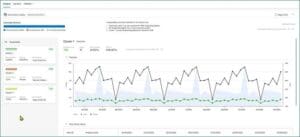
Real-time data is a game-changer for demand planning. Having access to up-to-date information allows organisations to react promptly to changes, minimising risks and maximising opportunities.
Real-time information is crucial to allow organisations to make key business decisions.
With AI-driven analytics, businesses can optimise inventory levels, reduce wastage, and enhance customer satisfaction by ensuring product availability when and where it’s needed.
2. Challenges in Demand Planning
Demand planning is often plagued by poor forecasting, leading to cash flow disruptions, overstocking, and missed sales opportunities.
Poor forecasting can impact cash flow, holding too much stock, and meeting customer expectations.
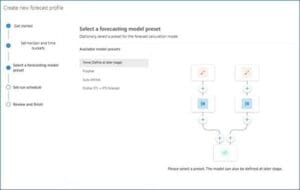
AI-powered forecasting models enhance accuracy by learning from historical trends and market dynamics, enabling businesses to make more informed decisions.
3. External Factors Influencing Supply Chains
Weather patterns, geopolitical events, and economic shifts all influence supply chains.
Weather can dictate how products like clothing or food are impacted in the supply chain process.
By integrating AI-driven predictive analytics, businesses can anticipate and mitigate the impact of such external factors, ensuring resilience and adaptability.
4. Predicting Demand for New Products
How can you accurately predict demand with a new product?
Forecasting demand for new products is challenging due to the lack of historical data. AI enhances accuracy by analysing market trends, similar product launches, and external factors to generate data-driven predictions. Traditionally, businesses rely on existing product sales as a reference, applying adjustments across different levels such as market region, or product family.
By integrating AI, organisations can further refine this process through automated date mapping, dynamic adjustments, and trend analysis, leading to more precise demand forecasts for new product launches.
5. Accurate Demand Forecasting & Advanced Technology Integration
Accurate demand forecasting is crucial for businesses to anticipate customer needs and optimise operations. AI-driven models, powered by advanced technologies like Azure Machine Learning, continuously refine predictions to enhance accuracy.
By integrating custom AI algorithms, businesses can tailor forecasting models to their specific requirements, improving production planning, inventory management, and overall supply chain efficiency.
6. Comparing Forecast Models
The ability to compare multiple forecasting models allows businesses to refine their demand planning strategies by evaluating different scenarios. Ai could enable comparisons of various models, helping organisations identify the most effective approach for their supply chain.
7. Handling Outliers
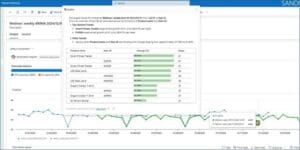
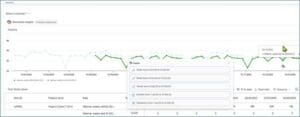
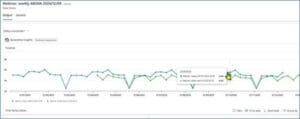
Outlier detection is critical for accurate forecasting.
AI-driven anomaly detection tools help identify and account for unexpected events, ensuring that forecasts remain reliable and data-driven.
8. Row-level Security and User Permissions
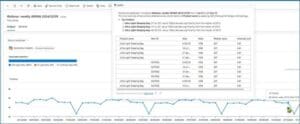
Row-level security allows businesses to restrict access to view and edit specific records based on flexible configuration, ensuring that sensitive business data remains protected while enabling seamless collaboration across teams. These security measures allow implementing granular access permissions, such as restricting users to view only records for specific regions like AIPAC and EMEA, with visual indicators like padlocks signifying restricted access. This level of access control is crucial for businesses operating across multiple regions, ensuring compliance and maintaining robust data security.
9. Copilot for Forecast Analysis
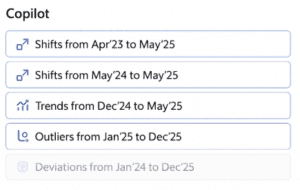
Copilot will do the analysis and respond in natural language, providing information about the largest shifts month-on-month or year-on-year.
Copilot can also generate insights on:
- Trends (e.g., trends within a specified date range)
- Outliers (e.g., anomalies within a specified date range)
- Deviations (e.g., shifts from within a specified date range)
These capabilities significantly reduce manual effort while improving strategic decision-making.
10. Future Innovations with Generative AI
The future of demand planning is being shaped by Generative AI.
Generative AI functionality will provide weekly insights on time series, presented by Copilot.
This continuous evolution of AI-powered tools ensures that businesses remain competitive by leveraging cutting-edge technology.
Conclusion:
The future of demand planning is being redefined by AI and Copilot, introducing game-changing innovations that drive efficiency, accuracy, and resilience. Businesses that embrace these advanced technologies can enhance forecasting, streamline operations, and proactively respond to supply chain challenges.
At Kerv, we are dedicated to helping organisations implement cutting-edge demand planning solution. By harnessing AI-driven insights and automation, businesses can navigate supply chain complexities with confidence, agility, and a competitive edge.
Transforming Supply Chain & Manufacturing with Microsoft Technology today!
See how Microsoft technology is helping organisations like yours build smarter, more resilient supply chain systems.
Explore now